Build A Brand People Can
Recognize.
Create a clear brand foundation with defined positioning, messaging, audience
and visual direction that keeps every brand touchpoint moving in the same direction.
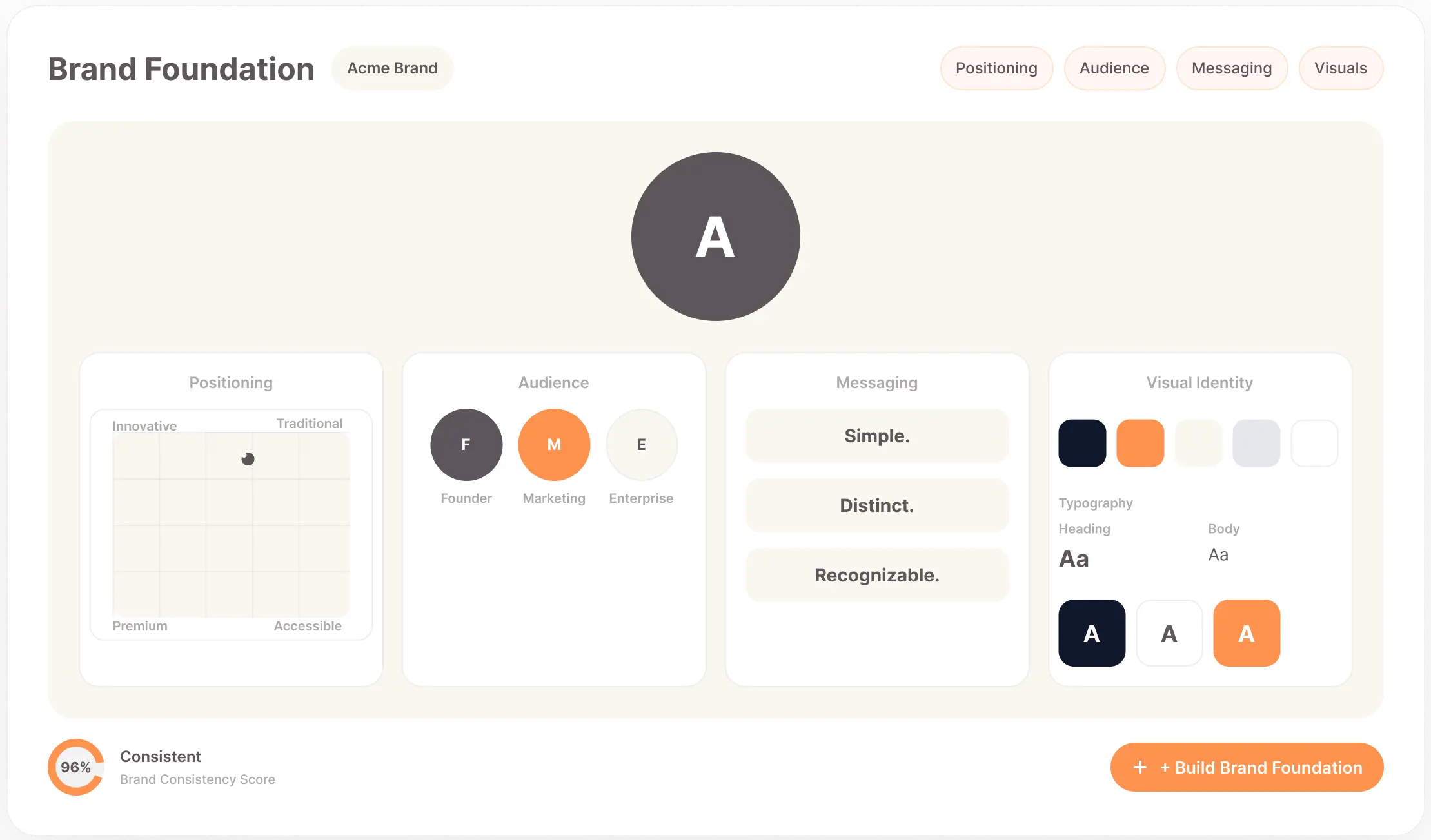
A Brand Is More Than A Logo And
A Colour Palette.
Building a recognizable brand requires decisions that go beyond visual identity. Your positioning, audience, messaging, personality and visual language all need to work together, otherwise the brand can look different, sound different and mean something different depending on where people encounter it.
Your Positioning Isn't Clear
When a brand cannot clearly explain who it serves, what it offers and why it is different, marketing becomes harder to focus. Teams may create individual campaigns without a consistent idea connecting them.
The Brand Sounds Different Everywhere
Website copy, social posts, sales materials and campaigns can easily develop different tones when there is no defined voice. Even good individual pieces can feel disconnected when they don't sound like they came from the same brand.
Visual Decisions Become Inconsistent
Colours, typography, imagery and design styles can vary across different assets when there isn't a shared visual direction. Over time, these small differences can make the brand harder to recognise.
Everyone Interprets The Brand Differently
When brand guidelines live mostly in people's heads, every new team member, designer or agency can interpret the brand in their own way. This creates unnecessary revisions and makes consistency harder to maintain.
Strategy Gets Separated From Execution
Brand strategy can become a document that sits apart from everyday marketing work. When the strategic decisions aren't accessible during content and creative production, teams often return to assumptions instead of using the original direction.
Strategy Gets Separated From Execution
Brand strategy can become a document that sits apart from everyday marketing work. When the strategic decisions aren't accessible during content and creative production, teams often return to assumptions instead of using the original direction.
The Real Problem
The challenge isn't simply creating brand assets. It is building a clear brand foundation that people across the business can understand, apply and carry consistently into every customer interaction.
A Strong Brand Starts With Clear
Decisions.
Brand building becomes easier when the important decisions are made before individual assets are created. A defined audience, clear positioning, distinctive messaging and consistent visual direction give teams a foundation they can use across marketing, communication and customer experiences.
A Clear Brand Position
Your brand needs a defined place in the market and a clear reason for customers to choose it. Positioning gives the rest of your communication a direction rather than leaving every campaign to define the brand again.
A Defined Audience
A brand becomes more relevant when it knows exactly who it is trying to serve. Understanding the audience's needs, motivations, pain points and expectations helps shape everything from messaging to creative decisions.
A Distinct Point Of View
Recognizable brands don't simply describe what they sell. They communicate a perspective about their category, customers or way of working that gives people something specific to associate with them.
Consistent Messaging
Your core messages should remain recognisable across your website, campaigns, social channels and sales communication. Different formats can adapt the message, but the underlying story should remain connected.
A Defined Brand Voice
Your voice determines how the brand communicates, while tone can change according to the situation. Defining both gives teams a practical reference for writing content that feels consistent without sounding repetitive.
A Coherent Visual Identity
Typography, colours, imagery, graphic elements and other visual decisions should work together to create a recognisable visual language. Consistency makes the brand easier to identify across different touchpoints.
A Usable Brand System
Brand strategy should be practical enough for teams to use during everyday marketing work. The goal is not simply to document decisions, but to make those decisions useful when creating the next campaign, page or piece of content.
Ready To Build A Brand People Can Recognise?
Define the strategy, audience, positioning, messaging, voice and visual direction behind your brand in one structured workspace.
Start Building
Turn Brand Strategy Into A Foundation
Your Team Can Use.
Brandstory AI's Brand Strategy product brings the core decisions behind a brand into one structured workspace. Define the business, audience, positioning, messaging and visual direction, then organise those decisions into a brand foundation that can guide future marketing work.
Start With Your Business
Define what your business does, the market it operates in, its offering and the direction it wants to take. Establishing the business context gives the brand strategy a foundation beyond surface-level visual choices.
Understand Your Audience
Define the people you want to reach and understand their needs, motivations, pain points and expectations. This creates a clearer basis for deciding how the brand should position and communicate itself.
Shape Your Positioning
Develop the core positioning that explains where the brand belongs, who it serves and what makes its offering meaningful within the category.
Build Your Messaging
Establish the central brand message, value proposition, key messages and supporting ideas that can be adapted across different marketing channels.
Define Your Voice
Set the personality and communication characteristics that should influence how the brand writes and speaks. This gives content teams a clearer reference when creating everyday communication.
Create Your Visual Direction
Define the visual characteristics that should make the brand recognisable, including colour direction, typography, imagery and other elements that contribute to its identity. Bring the decisions together into a structured brand foundation that can be referred to when developing marketing content and creative work.
Brand Strategy
Build The Foundation Behind Everything Your Brand Says And Shows.
Brand Strategy is the single product powering the Brand Building solution. It brings positioning, audience, messaging, personality, voice and visual direction into one structured process so teams can establish the foundation before producing individual brand assets.
Brand Foundation
Define the fundamental information behind the brand, including its purpose, offering, market and direction. This establishes the context required for the strategic decisions that follow.
A clear foundation helps ensure that later positioning and messaging decisions are connected to what the business actually wants to build.
Audience Definition
Build a clearer understanding of the people the brand is trying to reach. Define audience characteristics, needs, motivations and pain points to create a more useful foundation for positioning and communication.
The audience becomes a reference point for deciding what the brand should say and how it should say it.
Brand Positioning
Develop the position the brand should occupy within its market and the reason it should matter to the intended audience.
Positioning creates the central strategic direction that can then influence messaging, content and other customer-facing communication.
Value Proposition
Define the value the brand provides and the reason customers should consider it. A clear value proposition gives marketing teams a concise foundation for communicating the brand's relevance.
Brand Messaging
Develop the key messages that should remain consistent across different customer touchpoints. These messages can then be adapted into website content, campaigns, social communication and other marketing materials.
Brand Personality
Define the characteristics that should shape how the brand presents itself. Personality helps create consistency between the strategic positioning and the way the brand communicates.
Brand Voice & Tone
Establish how the brand should sound across different situations. The voice creates consistency, while tone can adapt depending on the audience, channel and context.
Visual Identity Direction
Create a structured direction for the visual side of the brand, including colour, typography, imagery and other identity considerations.
The goal is to give designers and marketing teams a shared visual reference rather than leaving each asset to be interpreted independently.
Build The Brand Before You Build
Everything Around It.
Define The Business
Establish what the brand does, what it offers and where it wants to go. Create the context that will inform every decision that follows.
Understand The Audience
Identify who the brand is for and what matters to them. Explore their needs, motivations, expectations and problems.
Define The Position
Clarify where the brand should sit in the market and what makes its offering relevant and distinctive.
Shape The Value
Define the value proposition and the core reasons customers should choose the brand. Turn the positioning into a clear value story.
Build The Message
Establish the core brand message and supporting messages that can be adapted across marketing channels.
Define The Voice
Set the brand personality, voice and tone so different teams can communicate with a consistent character.
Establish The Visual Direction
Create a coherent direction for colours, typography, imagery and other visual elements that contribute to recognition.
Create The Brand Foundation
Bring the decisions together into a structured reference that teams can use when creating future marketing, content and creative work.
One Brand Foundation For Every
Stage
Of Your Brand.
New Brand Foundations
Build the strategic foundation for a new business before investing heavily in campaigns, content and visual production. Establish the audience, positioning, messaging and identity direction first.
Brand Repositioning
Revisit an existing brand when its market, audience, offering or business direction has changed. Clarify the new position and align the messaging around where the brand is going next.
Product Branding
Develop a clear positioning and message for a new product or offering while maintaining a meaningful relationship with the parent brand.
Market Expansion
Adapt the brand for a new market or audience without losing the central ideas that make it recognisable. Define what needs to remain consistent and what needs to change.
Brand Messaging
Create a messaging foundation that marketing, sales and content teams can use across websites, campaigns, social media and other customer-facing communication.
Visual Identity Direction
Establish the visual principles that should guide designers and creative teams. Create a shared reference for colour, typography, imagery and other visual decisions.
Brand Guidelines
Bring brand decisions into a practical reference that can be used by internal teams, freelancers, agencies and other partners working on the brand.
Marketing Consistency
Give teams a common strategic foundation to work from when creating new marketing assets. This reduces the need to redefine the brand every time a new piece of communication is produced.
Growing Brands
Keep the brand foundation useful as the business adds new products, audiences, campaigns and channels. Evolve the expression while keeping the core positioning and identity connected.
Build A Brand Your Team Can Build On.
Define your brand's strategy, audience, positioning, messaging, voice, and visual direction in one workspace. Create a foundation for future campaigns, pages, products, or content.
Build Your BrandBuild A Brand Your Team Can Build On.
Define the strategy, audience, positioning, messaging, voice and visual direction
behind your brand in one structured workspace. Create a foundation your team can
return to whenever the next campaign, page, product or piece of content needs to
represent the brand.
Everything You Need To Know
What does Brand Strategy cover?
Brand Strategy brings together the core decisions behind a brand, including its business foundation, audience, positioning, value proposition, messaging, personality, voice, tone and visual identity direction.
Is this only for new brands?
No. It can be used to establish a new brand foundation or revisit an existing one when the business, audience, offering or market position has changed.
Can I define my target audience?
Yes. Audience definition is part of the strategic process. You can establish who the brand is trying to reach and use their needs, motivations and pain points to inform the wider brand direction.
Can I develop my brand positioning?
Yes. The product helps structure the positioning around the market, audience, offering and distinctive value the brand wants to communicate.
Can I create a brand voice?
Yes. You can define the personality, voice and tone that should guide how the brand communicates. This gives content and marketing teams a clearer reference for future communication.
Can I establish my messaging?
Yes. You can develop the central brand message, value proposition and supporting messages that can be adapted across different marketing channels.
Does Brand Strategy include visual identity?
Yes. The strategy can establish visual direction covering areas such as colour, typography, imagery and other elements that contribute to a consistent brand identity.
Can I create brand guidelines?
Yes. The strategic and identity decisions can be brought together into a structured reference that teams can use when creating future brand and marketing assets.
Can the strategy be used by designers and content teams?
Yes. The purpose of the brand foundation is to give different teams a shared reference for making creative and communication decisions. This helps reduce inconsistent interpretations of the brand across different outputs.
Can I use it when repositioning an existing brand?
Yes. You can use the strategic process to revisit the audience, positioning, value proposition, messaging and identity direction when the business is moving into a new market or changing its offering.
Does Brand Strategy create my complete marketing assets?
No. The purpose of this solution is to establish the strategic and identity foundation behind the brand. The resulting direction can then guide the creation of marketing, content and creative assets.
Do I need another Brandstory AI product for this solution?
No. Brand Strategy is the single product powering the Brand Building solution. The solution is intentionally focused on establishing the strategic and identity foundation required to build a recognisable and consistent brand.