Turn Search Visibility Into
Organic Traffic.
Find the opportunities worth pursuing, understand where your website stands
and track the search visibility that brings people to your brand.
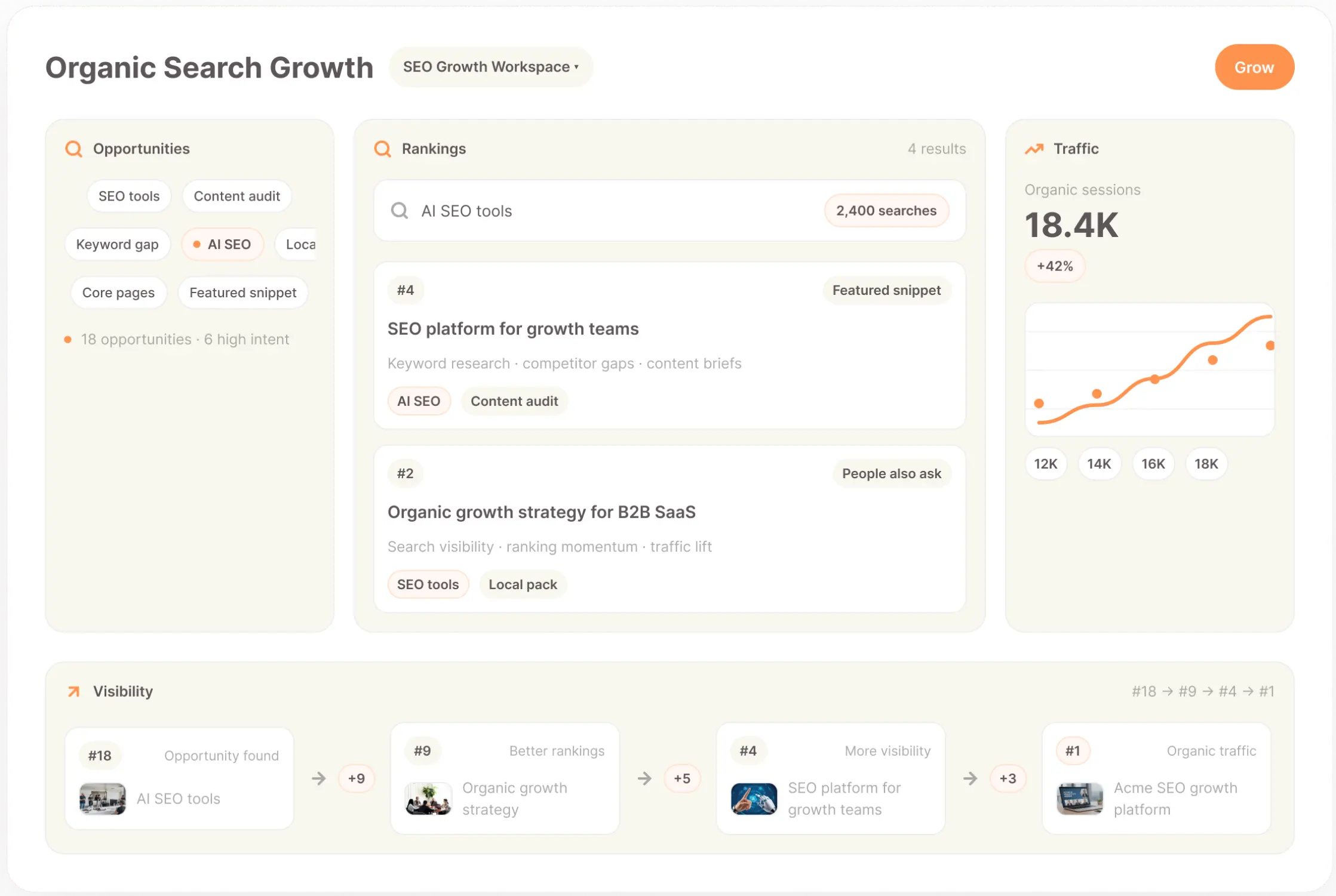
More Organic Traffic Starts With Knowing
What To Work On.
Organic traffic rarely grows from publishing more pages at random. It requires understanding what people search for, where your website is already visible, where competitors have an advantage and which opportunities are worth prioritising. Without that context, SEO work can become a long list of tasks without a clear connection to traffic growth.
You Don't Know Where The Opportunities Are
There can be thousands of keywords related to your industry, but not all of them are worth pursuing. Without understanding search demand, competition and your current position, it is difficult to separate useful opportunities from noise.
Competitors Are Capturing The Search Demand
Other websites may already be ranking for valuable keywords and topics that your brand has not yet captured. Without analysing their visibility, you can miss opportunities that are already proven within your market.
Your Existing Pages May Not Be Performing
A website can contain useful content and still struggle to attract organic visitors. Pages may rank lower than expected, target the wrong search intent or fail to compete effectively against other results.
SEO Decisions Become Fragmented
Keyword research, competitor analysis, ranking data and website audits often happen in different tools. When these pieces aren't considered together, it becomes harder to understand what should be prioritised first.
Rankings Change Constantly
Search visibility is not fixed. Your positions can move as competitors publish new content, search results change and your own website evolves. Without regular tracking, you may not notice important changes until traffic has already been affected. Technical issues such as broken links, duplicate content and crawl problems can also create unnecessary obstacles for search visibility.
The Real Problem
The challenge isn't simply getting your website to rank. It is understanding where your organic opportunities are, what is affecting your visibility and which actions can help turn search presence into sustained traffic.
Organic Growth Starts With A Clear
View Of Search.
Growing organic traffic requires a connected understanding of search demand, website performance and competitive visibility. The goal is to know where your audience is searching, where your website can compete and how your visibility changes after you act.
Find The Right Search Opportunities
Start with the searches that are relevant to your business and audience. Search volume, competition, CPC and existing rankings can help provide context when deciding which opportunities deserve attention.
Understand Search Competition
Your competitors can reveal valuable information about the search landscape. Understanding which domains rank, which pages perform and which keywords they capture can expose opportunities that aren't obvious from your own website.
Identify Content Gaps
Compare your visibility with competing websites to find relevant keywords they rank for while your domain does not. These gaps can provide useful direction for future content and optimisation work.
Improve Existing Pages
Not every opportunity requires a new page. Existing pages may already have the potential to perform better if their search targeting, content or technical foundations are improved.
Keep Your Website Technically Healthy
Search visibility depends on more than content. Regularly identifying technical and on-page issues helps your team understand whether problems within the website could be affecting performance.
Track What Changes
SEO work needs a way to measure movement. Tracking keyword positions, ranking pages and competitor presence gives you a clearer view of how your visibility changes over time.
Repeat What Works
Organic growth is an ongoing process rather than a one-time optimisation exercise. New opportunities appear, competitors change and rankings move, so the process needs to continuously return to research, prioritisation and measurement.
Ready To Improve Your Search Visibility?
Bring keyword research, competitor analysis, site auditing and position tracking together in one workspace so your team can make clearer decisions about organic growth.
Start Building
Turn Search Data Into A Clearer Organic
Growth Direction.
Brandstory AI's Ranking Hub brings keyword research, competitor analysis, site auditing and position tracking into one workspace. Instead of looking at isolated SEO metrics, you can move from discovering an opportunity to understanding the competitive landscape and monitoring how your visibility changes.
Discover Search Opportunities
Explore relevant keywords and search terms using keyword research tools. Review information such as search volume, competition, CPC and ranking context to understand the potential behind different opportunities.
Understand Your Domain
Review your website's organic visibility, keywords, pages and competing domains to understand where your site currently stands within the search landscape.
Find Competitor Gaps
Compare your domain against competitors to discover keywords they rank for that you do not. Use these gaps to identify areas that may deserve content or optimisation attention.
Audit Your Website
Run technical and on-page audits to identify issues such as broken links, duplicate content and other website problems that may affect search performance.
Track Your Rankings
Monitor selected keywords across the locations, languages and devices that matter to your business. Review position changes, ranking pages, SERP features and competitor presence from the same workspace.
Keep Improving
Return to the same visibility data as your website and competitors change. Use new keyword opportunities, ranking movements and audit findings to decide what deserves attention next.
Ranking Hub
Everything You Need To Understand And Grow Search Visibility.
Ranking Hub is the single product powering the Generate Organic Traffic solution. It brings together the search data needed to research opportunities, understand competitors, identify gaps, audit websites and monitor ranking movement without requiring your team to piece the information together across separate workflows.
Position Tracking
Track up to 500 keywords by country, city, language and device and monitor where your pages appear for the searches that matter to your business.
Review the current position, ranking page, matched URL, SERP features and competitor presence so ranking information has more context than a single position number.
Keyword Research
Discover relevant search terms and examine the information associated with them. Search volume, competition, CPC and related keyword information can help your team evaluate which opportunities are worth exploring further.
Use keyword research as the starting point for building a more focused organic search direction.
Keyword Gap Analysis
Compare your domain with competitors and identify keywords they rank for while your website does not. This creates a practical way to discover areas where other websites are capturing search visibility that your brand may want to pursue.
Keyword gaps can then become inputs for content planning and optimisation decisions.
Domain Overview
Explore a domain's organic performance, top keywords, top pages and competing websites to understand the search environment surrounding a business.
Use the same view to investigate your own website or understand how competitors have built their organic presence.
Traffic Analysis
Review estimated website traffic, traffic sources, geography and engagement information to understand the broader performance context around a domain.
This can help place organic visibility within the wider picture of how websites attract visitors.
Technical Site Audit
Crawl your website to identify technical SEO and on-page issues, including broken links, duplicate content and other areas that may require attention.
Save audit results and compare future crawls so your team can understand whether the website's technical condition is improving.
Competitor Analysis
Research competing domains and examine their organic rankings, top pages and keyword performance. Understand where competitors have visibility and which areas of search they appear to prioritise.
This provides context when deciding where your own organic efforts could be focused.
Local Position Tracking
Track rankings at the city level when organic visibility changes according to location. This is useful for businesses that need to understand search performance across different local markets.
See more than just the ranking position — review SERP features, competitor presence and ranking history over time.
Build A Repeatable Process Around The
Search Opportunities That Matter.
Understand Your Market
Start by exploring your domain, competitors and the search landscape around your business. Establish where your website currently has visibility and where competitors are already present.
Discover Search Opportunities
Research relevant keywords and topics and examine search volume, competition and other available signals. Build a clearer picture of where demand exists.
Analyse The Competition
Review competing domains, their ranking keywords and top-performing pages. Understand which areas of search they are already capturing.
Find The Gaps
Use Keyword Gap analysis to identify relevant searches where competitors rank and your domain does not. Separate meaningful opportunities from terms that aren't aligned with your business.
Audit Your Website
Crawl the website and identify technical and on-page issues that may need attention. Understand whether existing site problems could be limiting the performance of your pages.
Prioritise The Work
Bring keyword opportunities, competitor gaps, existing rankings and audit findings together to determine which areas deserve attention first.
Track Your Positions
Add priority keywords to Position Tracking and monitor their rankings across the locations, languages and devices relevant to your audience.
Monitor & Improve
Review ranking movement, competitor changes and new search opportunities over time. Use what you learn to inform the next round of SEO work and continue the cycle.
One SEO Workflow For Different
Organic
Growth Goals.
Build A Keyword Strategy
Research the search terms relevant to your business and evaluate them using available search data. Use the findings to create a more focused set of keywords worth tracking and pursuing.
Find Content Gaps
Compare your website with competitors to identify keywords they rank for while your domain does not. Use these gaps to discover subjects that could inform future content development.
Improve Existing Rankings
Track keywords where your pages already appear and monitor changes in position. Identify pages that may have room to improve rather than assuming every opportunity requires new content.
Discover Competitor Opportunities
Analyse competitor domains, ranking keywords and top pages to understand where other websites are gaining organic visibility. Use that information to identify areas where your own website could compete.
Monitor Local Search
Track rankings at the city level when your organic performance depends on location. Compare visibility across different markets to understand where your website performs differently.
Maintain Technical SEO
Run recurring site audits to identify technical and on-page issues. Save historical audits and compare results to understand what has been resolved and what still needs attention.
Monitor Search Performance
Create a tracked keyword set and regularly review position movement, ranking pages and SERP features. Keep important search performance information available without relying on occasional manual checks.
Plan Organic Content
Use keyword research and competitor gaps to identify topics that can inform your content programme. Give content teams search context before they decide what to create.
Build An Ongoing SEO Process
Bring research, competitive analysis, technical auditing and ranking monitoring into a repeatable workflow. Return to the same data as your market and search visibility change rather than treating SEO as a one-time project.
Turn Your Search Data Into Action.
Research audience search terms, understand competitors, uncover keyword gaps, audit your site, and track important rankings. Consolidate this info for clearer decisions on organic growth.
Grow Organic Traffic
Find The Search Opportunities That Can
Move Your Brand Forward.
Research the terms your audience searches for, understand your competitors, uncover keyword gaps, audit your website and track the rankings that matter. Bring the information together in one workspace so your team can make clearer decisions about organic growth.
Everything You Need To Know
What does Generate Organic Traffic help me do?
The solution helps you understand and improve the search visibility that can contribute to organic traffic. Ranking Hub brings together keyword research, competitor analysis, technical auditing and position tracking so your team can identify opportunities and monitor progress.
Is this only for keyword rank tracking?
No. Position Tracking is one part of Ranking Hub. The product also includes keyword research, Keyword Gap, Domain Overview, Traffic Analysis, Technical Site Audit and competitor analysis, allowing you to understand rankings within a broader search context.
Can I research keywords?
Yes. Keyword research helps you discover relevant search terms and review available information such as search volume, competition and CPC. These insights can help you decide which opportunities deserve further attention.
Can I see what my competitors are ranking for?
Yes. You can analyse competitor domains and use Keyword Gap to identify keywords where competitors rank and your domain does not. This can reveal search opportunities that may otherwise be difficult to find.
Can I track my existing rankings?
Yes. Position Tracking allows you to monitor selected keywords and review their positions, ranking pages, matched URLs, SERP features and competitor presence.
Can I track rankings by location?
Yes. Rankings can be tracked by country or city, with language and device targeting available as part of the position tracking setup. This allows you to monitor visibility in the markets that matter to your business.
Can I audit my website?
Yes. Technical Site Audit crawls your website and identifies technical and on-page issues, including broken links and duplicate content. You can save audits and compare future results to understand changes over time.
Can I use Ranking Hub to find content opportunities?
Yes. Keyword research and Keyword Gap can help identify search terms and topics where there is an opportunity to create or improve content. The data can then provide direction for your wider content planning process.
Can I understand which pages are bringing organic visibility?
Yes. Domain Overview and Position Tracking provide information about top pages, ranking pages and matched URLs, helping you understand which parts of your website are contributing to search visibility.
Can I track competitors alongside my own rankings?
Yes. Competitor presence can be reviewed alongside your own ranking information. This provides additional context when evaluating whether a position is improving, declining or facing stronger competition.
How often should I check my rankings?
That depends on how frequently your market and SEO activity change. The important part is having a consistent tracking process so meaningful movement can be identified rather than relying on occasional manual checks.
Does Generate Organic Traffic require another Brandstory AI product?
No. Ranking Hub is the single product powering the Generate Organic Traffic solution. The solution focuses on using its search research, competitor analysis, technical audit and ranking capabilities to help teams understand where organic growth opportunities exist and monitor the visibility that follows.